|
Blog
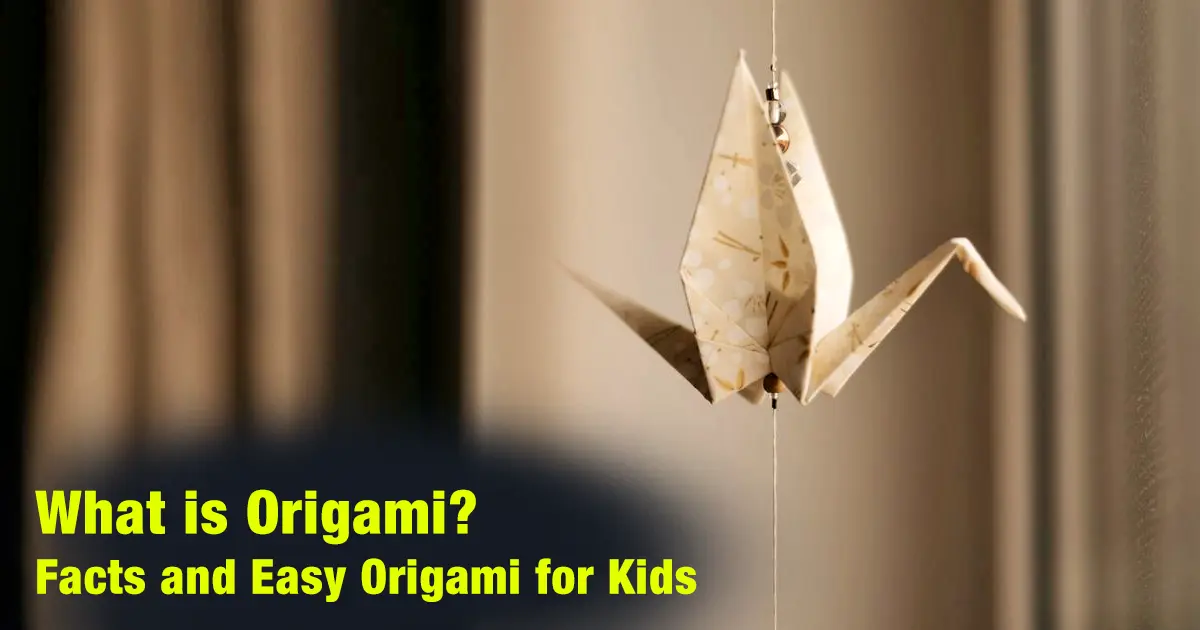
What is Origami? - Facts and Easy Origami for Kids
6 July 2026
Table of Contents:
Have you ever looked at a simple sheet of paper and wondered what it could become? With a few precise folds, a flat square can transform into a soaring bird, a jumping frog, or a delicate flower. This art of paper folding, known globally as origami, is a centuries-old tradition that bridges creative expression with mathematical precision. While some modern variations incorporate cuts or adhesives, traditional origami relies strictly on patience, imagination, and a single piece of paper, requiring absolutely no scissors or glue.
For children, this craft is far more than just a fun afternoon activity; it serves as a powerful tool for early childhood development. Educational research shows that paper folding directly supports core learning outcomes by sharpening focus, building spatial awareness, and strengthening fine motor skills. When children practice origami, they aren't just creating beautiful shapes; they are actively exploring geometry, fractions, and algorithmic sequencing in a tangible, hands-on way. Let us dive into the fascinating world of origami, explore its rich history, and learn how to create simple designs that will inspire young minds.
Understanding the Art of Paper Folding
To truly appreciate this craft, one must understand its roots. So, what is origami? At its core, it is the traditional Japanese art of paper folding. The term itself provides a direct clue to its meaning: in Japanese, "ori" translates to folding, and "kami" means paper. Over time, the phrase evolved to describe the specific artistic practice of shaping paper into intricate designs without cutting or pasting.
While the art form is deeply tied to Japanese culture, the history of paper itself begins in China. Cai Lun is traditionally credited with improving and standardizing papermaking around 105 CE during the Han Dynasty, though older, more primitive paper-like materials existed before his time. Because high-quality paper was incredibly rare and expensive during these ancient eras, it was initially reserved for elite religious ceremonies, formal rituals, and luxury gifts.
By the sixth century, Buddhist monks carried the secrets of papermaking to Japan. Japanese artisans refined the process, creating a strong, flexible paper known as washi. As paper production became more widespread and affordable, the practice of folding moved from sacred temple rituals into mainstream society. By the Edo period (1603–1867), the craft had transformed into a popular form of recreation and artistic expression for people of all backgrounds.
The Materials You Need to Start
One of the most appealing aspects of this hobby is how accessible it is. You do not need an expensive toolkit or specialized machinery to begin. While you can start with everyday items like standard printer paper, wrapping paper, or notebook pages, using dedicated origami paper can elevate your experience. This specialized paper is manufactured to handle crisp, repeated folds without tearing. It is typically thin, durable, and pre-cut into a square shape, often featuring a vibrant color on one side and a plain white surface on the reverse side to help you keep track of your steps.
For most beginner projects, using a square sheet of paper is recommended, though many modern or advanced models utilize rectangular or specially shaped sheets. If you are cutting your own squares from copy paper, just aim for clean, even edges. Using high-quality origami paper ensures that your final creations hold their shape beautifully and look crisp. For younger children, larger origami sheets measuring six or eight inches are highly recommended, as these spacious origami sheets are much easier for small hands to manipulate than tiny squares.
Fascinating Facts for Young Minds
Sharing historical and cultural facts can make the crafting experience even more engaging for young learners. Here are some incredible insights about this traditional art form:
| • |
A Symbol of Peace: The crane is perhaps the most famous design in the world. In Japanese culture, it represents longevity and good fortune. According to a popular Japanese tradition, folding one thousand paper cranes is believed to bring good fortune or grant a wish. |
| • |
Mathematical Connections: Modern scientists and mathematicians study folding patterns to solve complex engineering problems. Origami-inspired engineering principles are used in satellite solar panels that can unfold efficiently in space, as well as medical stents that expand safely inside human blood vessels. |
| • |
The Power of Memory: Practicing folding sequences may help children strengthen concentration, memory, and problem-solving skills. It encourages them to memorize patterns and understand how multi-dimensional structures are formed from a flat surface. |
Easy Creative Projects for Beginners
When introducing children to this craft, it is best to begin with straightforward designs that yield immediate, rewarding results. Simple projects build confidence and help children master foundational folding techniques, such as the valley fold and the mountain fold. Here are four easy origami projects to get started:
1. Easy Paper Boat
| • |
Start with a rectangular sheet of paper (like standard printer paper) and fold it in half from top to bottom. |
| • |
Fold it in half from left to right to make a crease, then unfold that step. |
| • |
Fold the top two corners down to meet at the center crease, forming a triangle shape at the top. |
| • |
Take the bottom flap of paper and fold it upwards against the base of the triangle. Flip the paper over and repeat on the other side. |
| • |
Gently tuck the loose corners around the edges so they overlap. |
| • |
Open the bottom of the triangle to form a hat shape, then press it flat into a diamond. |
| • |
Fold the bottom point of the diamond up to the top point. Flip it over and repeat on the back. |
| • |
Pull the left and right points outward to open the boat, flattening the base so it sits upright. |
2. Easy Dog Face
| • |
Start with a square sheet of paper. Fold it diagonally in half to form a large triangle. |
| • |
Turn the triangle so the long, flat side is at the top and the point faces down. |
| • |
Fold the left and right corners downward at an angle to create two floppy dog ears. |
| • |
Fold the bottom point slightly upward to make the snout. |
| • |
Use a black marker to draw eyes on the face and a nose on the snout to complete this animal origami project. |
3. Easy Tulip
| • |
Fold a square sheet of paper diagonally in half to form a triangle with the long side at the bottom. |
| • |
From the bottom center point, fold the right corner up and outward at an angle. |
| • |
Repeat this step with the left corner, folding it up and outward to create the flower petals. |
| • |
Flip the flower over and fold the sharp left and right side points slightly inward to round out the blossom. |
| • |
Optional: Attach a green paper stem to complete your flower. |
4. Easy Butterfly
| • |
Fold a square sheet of paper diagonally in half both ways, then open it flat to leave an "X" crease. |
| • |
Fold the paper in half horizontally and vertically, then open it again. |
| • |
Bring the side creases together to collapse the paper into a triangle (a waterbomb base). |
| • |
Fold the two top layer corners up to meet at the top peak. |
| • |
Flip the triangle over. Lift the bottom point up past the top edge so it sticks out slightly, then press down to crease. |
| • |
Fold that small protruding point over the edge to secure it, and fold the entire butterfly slightly in half to shape the wings. |
Moving Beyond the Basics
Once children master these, they can move on to the paper crane. The paper crane is one of the most famous designs and a great project for children who are ready to try a slightly more challenging model. While it requires a bit more focus, the process teaches children the importance of symmetry and precision. By following the steps carefully, beginners can transform a flat square into an iconic symbol of peace.
Crafting an animal origami project is a fantastic way to combine artistic skill with imaginative play. For example, by using markers to draw on their finished pieces, kids can build their own paper collections, fostering a sense of accomplishment.
Introducing easy origami designs ensures that young learners remain motivated rather than frustrated by overly complex steps. With just a few attempts, children can independently create a wide variety of delightful figures. These simple origami crafts serve as a wonderful gateway to more advanced artistic techniques as children grow older.
Conclusion
The art of paper folding proves that you do not need digital screens or expensive gadgets to spark creativity and joy. It is a mindful, educational, and deeply rewarding practice that brings people together. At JAIN Heritage School, holistic development is prioritized by encouraging students to explore diverse creative mediums that balance academic learning with hands-on artistic expression. To learn more about our vibrant campus culture and comprehensive educational programs, please visit the JAIN Heritage School website.
FAQs
Q1. Why is it called origami?
A1. The name comes from two Japanese words: "ori," which means folding, and "kami," which means paper. The term gradually became the widely accepted name for the art of paper folding in Japan to describe transforming flat sheets of paper into various shapes without using scissors or glue.
Q2. Can AI do origami?
A2. Artificial intelligence can calculate highly advanced folding mathematical patterns and simulate designs digitally, but AI itself cannot physically fold paper. Physical robotic systems guided by AI algorithms are currently being developed to perform precise folds, but the human touch remains essential for traditional crafting.
Q3. What is the oldest origami?
A3. One of the earliest documented references to Japanese paper folding appears in a poem written in 1680 by Ihara Saikaku, which mentions ceremonial paper butterflies used during traditional Japanese weddings. While earlier folding traditions likely existed without written records, the first instructional book containing step-by-step folding guides was published later in 1797.
Q4. What is the hardest origami?
A4. The most difficult designs belong to a style called "hyper-complex" folding. Famous artists like Robert Lang use a single piece of paper to create incredibly realistic insects with tiny legs, antennas, and wings. These models can take dozens of hours to finish and require hundreds of tiny, careful folds.
Q5. Is origami math or art?
A5. Origami combines artistic creativity with geometric principles such as symmetry, angles, and spatial reasoning. While it is celebrated globally as a beautiful visual art form, it is also highly valued as a hands-on tool for modern mathematical study and engineering.
|

 Print
Print