|
Blog
A Few Extracurricular Activities that Suit Every Child
16 June 2026
Table of Contents:
Schools focus on teaching academics, but extracurricular activities help develop the essential skills that support the overall growth of children. Extracurricular activities help boost the self-esteem, emotional well-being and social connection among children. Here are a few extracurricular activities that children generally enjoy.
Why Extracurricular Activities Matter
The importance of extra curricular activities is wide in a child's overall growth. These activities are opportunities to learn that are not always available in regular classes. They help children develop confidence, learn new skills, and perform better in academics.
Key benefits include:
- Encourages children to try new activities
- Discover interests outside regular schoolwork
- Reduces stress by having fun
- Helps children stay healthy physically and emotionally
Five Extracurricular Activities Suitable for Most Children
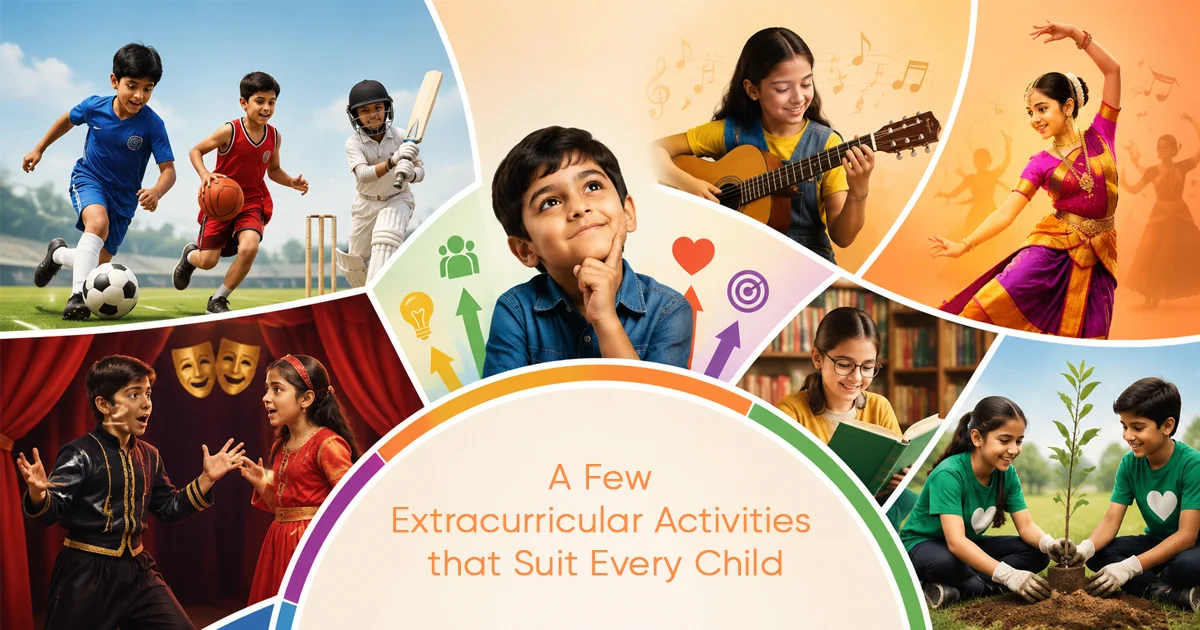
Team Sports (Football, Basketball, Cricket)
Team sports are a great way for children to develop interpersonal abilities. As children play together, they learn to listen, communicate and make decisions. They learn how to work together as a team and discover their strengths.
Other Benefits:
- Physical health and fitness for children
- Develops skills like confidence and social skills
- Helps support concentration and retention in studies
Music and Dance
Music and dance offer children healthy ways to express their talents and interests in art. The lively activity can help support brain development and improve motor skills in children. Participating in these activities helps improve self-esteem and confidence in children.
Other Benefits:
- Encourages creativity and self-expression
- Improves coordination, balance and physical fitness
- Builds social bonds when performed in groups or classes
- Boosts the overall mood and happiness
Drama and Theatre
Drama and theatre activities help children develop skills of emotional expression. By participating in these activities, children naturally improve their creative skills and also develop deep empathy. These creative outlets also encourage teamwork and enhance cognitive development through storytelling and improvisation.
Other Benefits:
- Develops social maturity through role-playing
- Builds confidence through public performances
- Improves teamwork and collaboration
- Encourages empathy through understanding different characters and perspectives
Reading Clubs and Storytelling
Reading and storytelling clubs help promote intellectual growth in children. They learn to practice active listening, share perspectives and explore stories in small groups. This helps broaden their understanding of various aspects of life.
Other Benefits:
- Expands vocabulary and comprehension
- Enhances creativity and memory skills
- Supports intellectual development by learning new perspectives
Community Service and Volunteering
Community service and volunteering help children develop social maturity while exposing them to real-world communities. Guided projects teach young children responsibility, respect, and care for others and the environment.
Other Benefits:
- Builds meaningful relationships with people from diverse backgrounds
- Improves interpersonal skills and teamwork abilities
- Encourages empathy and compassion for society
How These Activities Help Key Areas of Growth
Extracurricular activities support development across multiple areas of a child's life. This includes:
- Interpersonal abilities: Group activities like team sports, drama, and projects can improve interpersonal skills; children in structured programs show stronger development than those without them.
- Self-expression: Creative outlets (music, dance, art, theatre) are safe spaces to express emotions. Parents should encourage and support these outlets.
- Social skills: Children learn to work with others, see different points of view, and develop interpersonal skills more quickly.
- Intellectual development: Extracurricular activities give children a chance to discover their interests, learn new things and think critically. These supplements support their formal education and contribute to intellectual development.
Making Activities Work for Your Child
Make sure your child is organized about their commitments to get the most out of activities. Consider:
- Balance: Don't over-schedule. It's better to do a few things well.
- Follow your interests: Focus on what they like to do.
- Right age level: Choose activities appropriate for the age group.
- Reliable attendance: Regular attendance beats sporadic visits.
- Support: Provide safe spaces for children to be themselves.
Conclusion
Extracurricular activities give every child a chance to express themselves, develop social maturity and sharpen their intellect. The importance of extra curricular activities is that they help improve performance in academics, emotional expression, build leadership, confidence, and practical life skills. Whether it be sports, arts, clubs or community service, these activities help children build confidence, develop new skills, and connect better with others. The key is to discover the activities your child enjoys the most.
For more tips on helping your child manage their activities and stay organized, check out other helpful articles on the JHS Academy website.
FAQs
Q1. Which extracurricular builds confidence?
A1. Activities like team sports, drama, theatre, and music help build confidence and interpersonal skills by letting kids practice skills, perform in front of others, and see their progress.
Q2. Which activity is best for children?
A2. There isn't one best activity. Each child benefits differently. Team sports, music, drama, reading clubs, and community service all support different aspects of development. Let your child choose what they enjoy most.
Q3. What are type 3 fun activities?
A3. Type 3 fun activities are those that may be challenging or uncomfortable at first but become enjoyable and rewarding with time, like learning a new sport or performing on stage.
Q4. What is the most popular activity for kids?
A4. Sports are among the most common extracurricular activities, followed by arts, school-based clubs, and community service.
|

 Print
Print